Cancer is increasingly becoming a major public health concern in Jammu and Kashmir, with thousands of people diagnosed every year and families facing the emotional, physical and financial consequences of the disease. Behind every diagnosis lies a difficult journey involving medical treatment, uncertainty and in many cases, prolonged financial hardship. As National Cancer Awareness Day is observed on November 7, the growing cancer burden in Kashmir raises an urgent question: Are awareness, prevention and early detection keeping pace with the disease?
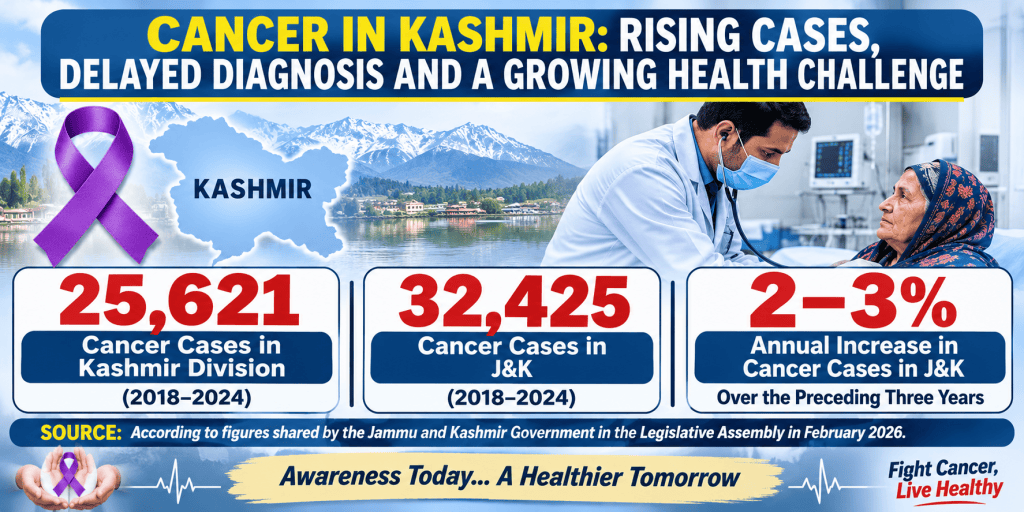
The numbers present a serious picture. According to figures shared by the Jammu and Kashmir Government in the Legislative Assembly in February 2026; 32,425 cancer cases were reported across the Union Territory over the three-year period covered by the government’s reply. Of these 25,621 were reported from Kashmir. The commonly reported cancers included lung, breast, oral, cervical, prostate and pancreatic cancers. These figures underline the scale of the challenge, although an increase in reported cases does not necessarily mean an equivalent rise in actual cancer incidence, as improvements in diagnosis and detection can also contribute to higher numbers.
The disease also raises questions about lifestyle, environmental exposure and preventable risk factors. Tobacco consumption remains one of the major concerns, particularly because of its established association with lung, oral and other cancers. Dietary habits, obesity, physical inactivity and certain environmental exposures also deserve attention. In Kashmir, research into the relationship between traditional dietary patterns, high salt consumption and stomach cancer has highlighted the need for further scientific investigation. However, individual food habits should not be treated as a direct cause without medical evidence.
One of the biggest challenges in the fight against cancer is recognising the disease early. Persistent cough, unexplained weight loss, unusual bleeding, difficulty swallowing, non-healing sores or an unexplained lump should never be ignored. Yet fear, misconceptions, social stigma and lack of awareness can prevent people from seeking medical advice promptly. In remote and rural areas, distance from specialised healthcare facilities and financial constraints can add to these difficulties.
Kashmir has important institutions providing specialised cancer care, including Sher-i-Kashmir Institute of Medical Sciences (SKIMS), Srinagar and the State Cancer Institute at Government Medical College, Jammu. However, strengthening cancer care requires more than specialised hospitals. Accessible screening, reliable diagnostic facilities, trained medical personnel and timely referrals from district hospitals are equally important. The government has also announced plans for a comprehensive Cancer Control Strategy in collaboration with NITI (National Institute for Transforming India) Aayog and ICMR (Indian Counsil of Medical Reasearch), focusing on prevention, early diagnosis and treatment.
Prevention must become a part of everyday public health awareness. Avoiding tobacco, maintaining a healthy weight, remaining physically active, following a balanced diet and seeking medical advice about recommended screening can reduce risks and help detect certain cancers earlier. Awareness about HPV (Human Papillomavirus Vaccine) vaccination and cervical cancer screening is particularly important for women’s health. People must also understand that cancer is not contagious and that a diagnosis should never become a reason for social isolation.
National Cancer Awareness Day should serve as more than an annual reminder. Kashmir needs sustained awareness campaigns, accessible screening programmes, stronger healthcare infrastructure and affordable treatment. The fight against cancer cannot begin only after a diagnosis; it must begin with prevention, awareness and timely action. In Kashmir, every delayed diagnosis is a reminder that awareness must reach people before the disease does.


