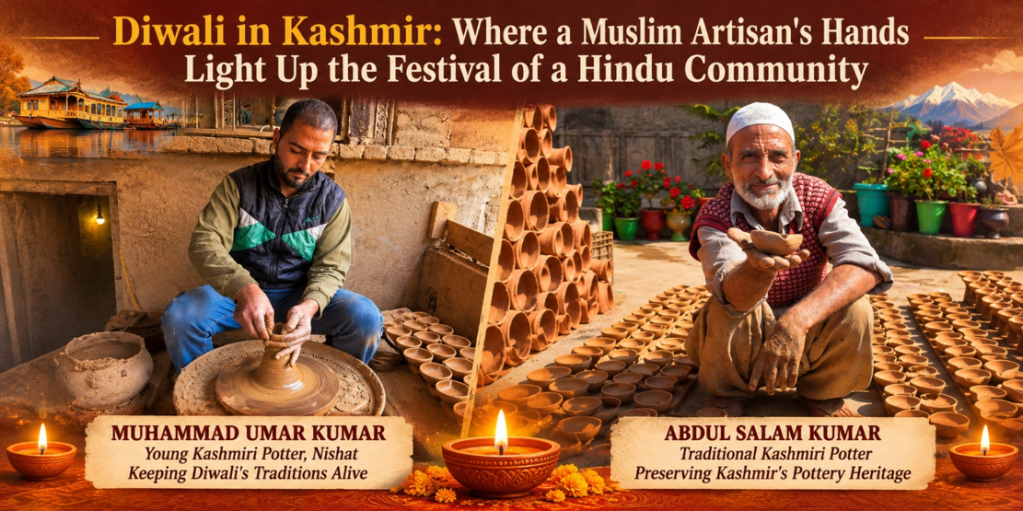
As the festival of lights approaches, the courtyards of a pottery workshop in Nishat, Srinagar, begin to fill with hundreds of earthen lamps. Made from ordinary clay, these small diyas carry a message that goes far beyond the festival itself. They tell a story of craftsmanship, mutual respect and the shared cultural heritage of Kashmir where a Muslim artisan helps bring light to the homes of Hindu families.
At the centre of this story is Muhammad Umar Kumar, a young Kashmiri Muslim potter from Nishat who along with his family, prepares traditional earthen diyas for Diwali. A commerce graduate, Umar chose to continue his family’s generations-old pottery tradition rather than pursue a conventional career. His efforts have not only helped revive an age-old craft but have also created a meaningful connection between communities through their shared appreciation of traditional art.
Umar and his father, Abdul Salam Kumar, have worked hard to meet the growing demand for handmade lamps during Diwali. In 2023, the family planned to produce around 20,000 diyas, with orders coming from different parts of Jammu and Kashmir. For Umar, the work is about more than earning a livelihood. He has expressed happiness that Hindu families celebrate the festival by lighting lamps made by his hands. He has also spoken about how communities support one another economically during each other’s festivals.
This simple exchange reflects an important aspect of Kashmir’s cultural harmony. While Hindu families purchase diyas made by Muslim artisans, people from different communities also contribute to livelihoods through their skills, products and traditional occupations. Such everyday interactions often express the spirit of togetherness more meaningfully than words.
For Kashmiri Pandits, Diwali carries memories of family gatherings, prayers, decorated homes and the warmth of ancestral traditions. The festival is an occasion to worship Goddess Lakshmi, light earthen lamps, share sweets and welcome prosperity and happiness. For many families living away from their ancestral homes, these celebrations also bring back memories of neighbourhoods, childhood days and cultural practices that remain an important part of their identity.
Kashmir’s pottery tradition, meanwhile, deserves equal attention. Once associated with numerous families across the Valley, the craft has faced challenges due to changing markets, modern alternatives and declining interest among younger generations. Artisans like Umar and his father are making efforts to keep this traditional skill alive. Every diya they prepare represents not only a festive requirement but also the continuation of knowledge passed down through generations.
The significance of Diwali in Kashmir, therefore, extends beyond the lighting of lamps. It offers an opportunity to recognise the contributions of people from different communities in preserving one another’s traditions. It reminds us that cultural harmony is built through everyday relationships, mutual support and respect for each other’s celebrations.
As a Kashmiri Muslim artisan shapes clay into lamps that will illuminate Hindu homes, his work becomes a beautiful expression of the Valley’s shared heritage. The hands that prepare the diyas may belong to one community, but the light they spread belongs to everyone. This Diwali, the little earthen lamps of Kashmir carry a message worth remembering: traditions may have different origins but humanity, kindness and the spirit of togetherness know no boundaries


